
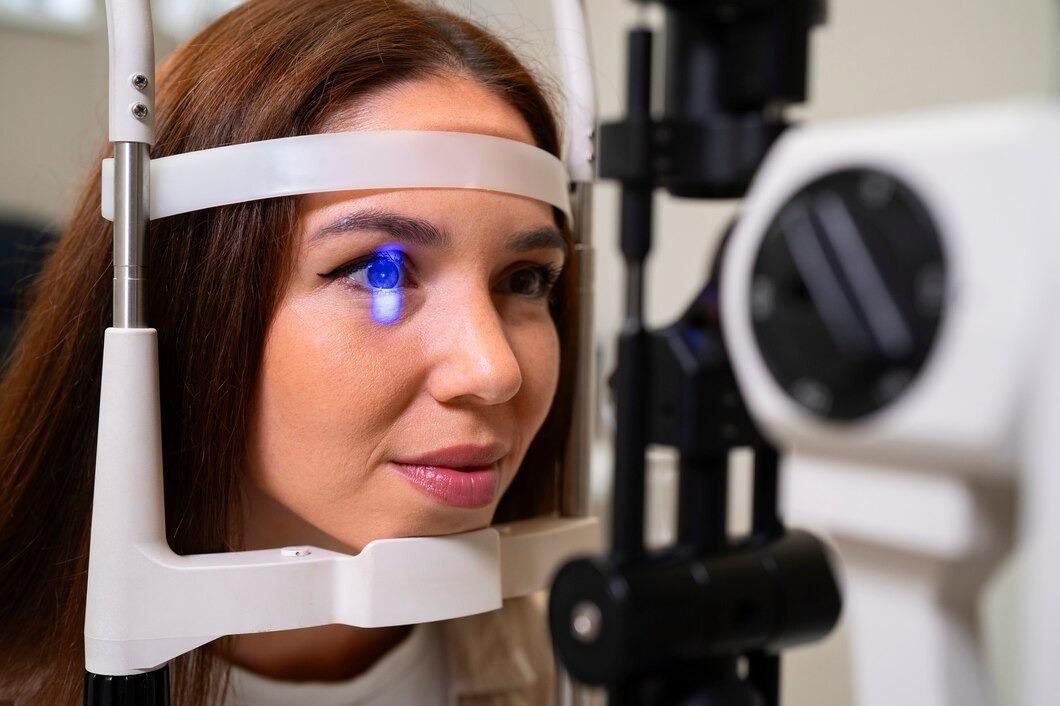
LASIK eye surgery: reasons, procedure, benefits, and risks
LASIK is a type of laser eye surgery. There are several different types of LASIK, including traditional LASIK, wavefront-guided LASIK (custom LASIK), and full LASIK (bladeless).
What is LASIK eye surgery?
It is one of several vision correction surgeries that work by reshaping the cornea (the clear front part of your eye) so that light focuses on the retina at the back of the eye, thus improving vision.
Why is LASIK performed?
LASIK is used when light does not focus properly on the retina, resulting in blurry vision. This is what doctors call a refractive error. Surgeons perform LASIK surgery to correct refractive or focusing errors. The main types of refractive errors include:
Hyperopia (farsightedness): Light focuses behind the retina instead of on it. In this case, we see distant objects more clearly, but near objects appear blurry.
Nearsightedness (myopia): Light rays focus in front of the retina, blurring distance vision. In this condition, we see near objects clearly, but distant objects appear blurry.
Astigmatism: When the cornea is unevenly curved or flattened, the result is astigmatism, which disrupts the focusing of both near and far vision.
Who are not candidates for LASIK surgery?
People who have any of the following conditions:
Pregnancy or breastfeeding
Age under 18
People with an eye condition that causes thinning and swelling of the cornea, or if they have a family history of such a condition
Age-related changes in the eye that make vision less clear
If you are considering LASIK surgery, talk to your doctor about your concerns and what you would like to know. Your doctor will discuss whether you are a candidate for this procedure or other similar procedures.
What are the risks of LASIK eye surgery?
As with all surgical procedures, LASIK surgery carries a risk of some complications. The most common complications include:
Dry eyes: You may experience unusually dry eyes during the healing process, which can reduce your vision. Your eye doctor may recommend using eye drops for dry eyes.
Visual changes
Diffuse lamellar keratitis
Complications of a corneal flap
What are the benefits of LASIK eye surgery?
Minimal pain
You may not need to wear glasses or contact lenses as much, or at all, after LASIK.
No bandages or stitches are required.
How is the procedure performed?
The eye surgeon uses a small blade or laser to open a tiny hinged flap and fold it back from the front of your eye. Folding the flap back allows the doctor to access the desired part of the cornea to reshape. Using a programmed laser beam, the eye surgeon reshapes portions of the cornea. With each pulse of the laser beam, a small amount of corneal tissue is removed. After the cornea has been reshaped, the surgeon repositions the flap. The flap typically heals without sutures. Your eyes will likely heal very quickly. Most patients notice improved vision within a few days.
LASIK surgery is usually completed in 30 minutes or less.
After reading this article and learning so much about LASIK eye surgery, would you prefer to have this procedure or not?