
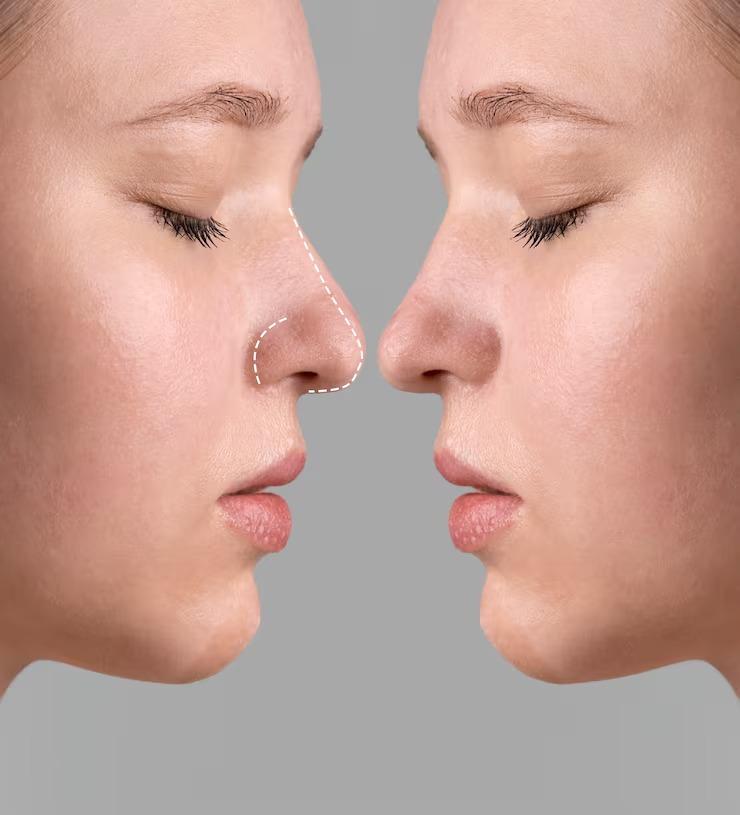
Rhinoplasty: Types, Causes, Procedure, Results, and Risks
These days, we hear a lot about rhinoplasty. Almost everyone has seen some results and admired them. It's become a hot topic on television, a trend, and a celebrity favorite. So, what exactly is rhinoplasty? What are the expected results of this procedure? Is it beneficial and effective? Let's learn more about rhinoplasty in this article.
What is rhinoplasty?
Rhinoplasty is a surgical procedure to change the shape of the nose by modifying its bone, cartilage, or skin, or to improve its breathing function.
This procedure aims to preserve the original anatomy through cartilage suturing techniques that maintain the cartilage, augment missing areas to correct deformities, and restore structural support to the bones and cartilage. Thus, we support the nose's function while preserving its aesthetic appeal.
What are the types of rhinoplasty?
Rhinoplasty is classified as open or closed depending on the type of incision the surgeon uses. In open rhinoplasty, the surgeon makes a small incision in the septum between the nostrils and then makes additional incisions inside the nose.
While closed rhinoplasty involves incisions only on the inside of the nose.
Why do we perform this procedure?
Rhinoplasty can be performed to correct many problems, including:
- Internal and external nasal diseases.
- Unsatisfactory aesthetic appearance.
- Deformities resulting from previous rhinoplasty surgeries.
- Airway obstruction.
- Congenital nasal deformities.
What does rhinoplasty involve?
This procedure involves several changes, such as:
- Change in size.
- Change in angle.
- Bridge correction.
- Tip reshaping.
This procedure offers excellent aesthetic results, fulfilling the patient's desire for their desired shape and boosting their self-confidence. However, it takes approximately 12 months to achieve the final result due to the natural changes that occur throughout a person's life.
Teenagers should not undergo rhinoplasty until their noses reach their full adult size. The minimum age for rhinoplasty is 16 for girls and 18 for boys.
Is rhinoplasty common?
Over the past 20 years, rhinoplasty has been one of the most popular cosmetic surgeries. This is due to fashion trends and people's desire to keep up with them, as well as the cultural and scientific advancements in society.
What are the results of rhinoplasty?
Rhinoplasty can change your appearance, making your nose smaller or altering its shape. This procedure can make people feel more confident by improving their appearance and enhancing their aesthetic sense.
Rhinoplasty is a relatively safe and straightforward procedure, but recovery can take some time. While the patient may fully recover, some effects may take months to disappear, so it takes approximately 12 months to see the final result.
What are the risks of rhinoplasty?
As with all surgical procedures, there are several risks associated with rhinoplasty. These include bleeding, infection, and an allergic reaction to anesthesia. Potential risks of rhinoplasty include:
- Breathing difficulties
- Scarring
- Pain or discoloration
- Perforation of the nasal septum
- Patient dissatisfaction with the result
- The need for additional surgery
Finally, after reading this article and learning about rhinoplasty, including its risks and benefits, would you consider undergoing this procedure?